GADI Coordinator, Olukoya Calls For Inclusion of Grappling In School Sports
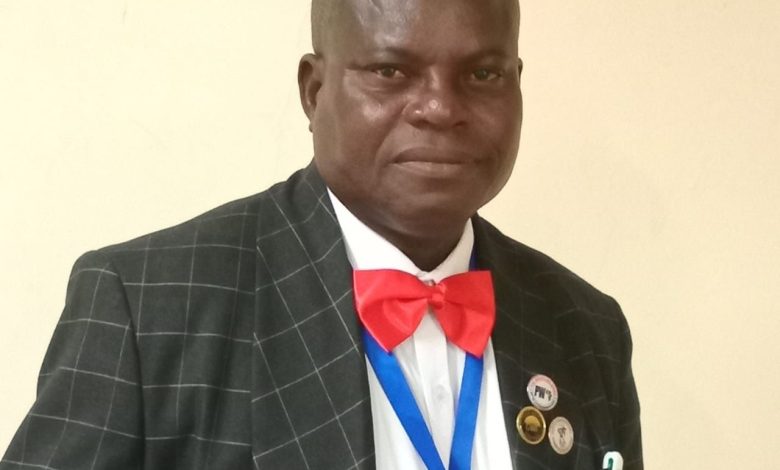
The time has come for Nigeria to broaden the scope of school sports by giving grappling a structured place within the nation’s grassroots sporting-development system, according to Olusesan Olukoya, National Coordinator of the Grappling Athletes Development Initiative (GADI).
Olukoya believes introducing grappling, which is a form of combat sport or martial arts focused mainly on controlling, holding, throwing, pinning, and submitting an opponent, rather than striking with punches and kicks in schools could create another avenue for talent discovery, physical development, discipline, sportsmanship and youth development, while strengthening Nigeria’s long-term athlete-development pipeline.
His call comes at a time when the Federal Government has been pursuing closer integration between education and sports.
In 2025, the Federal Government inaugurated a Joint Committee on Sports and Education to reposition school sports as a national talent-development pipeline, including identifying and developing young athletes from primary through tertiary institutions.
“Grappling is more than competition” According to Olukoya, grappling should not be viewed simply as a combat discipline.
“Grappling can become an important educational and sporting tool when it is properly introduced, supervised and taught by qualified instructors. It can help students develop discipline, coordination, confidence, respect for rules and sportsmanship while also creating an avenue for discovering future athletes.”
He argues that the school environment provides an ideal starting point for introducing young people to different sporting disciplines.
According to him, Nigeria already has a history of using schools as a foundation for sporting development, while research on Nigerian school sports has identified qualified personnel, facilities and equipment as important requirements for effective school-sports programmes.
One of the principal arguments for introducing grappling into schools is early talent identification. A new pathway for talent discovery. Nigeria has a large youth population, but many potentially talented athletes may never encounter a sport that matches their natural abilities. Olukoya believes school-based grappling could change that.
“Definitely not every child will become a footballer, basketball player or sprinter,” he said.
“We must give young people opportunities to discover the sports in which they can excel.
“A structured school programme could allow promising students to progress from school-level participation to local, state and national competitions, subject to appropriate age categories and safeguarding standards.
“That approach would complement the Federal Government’s stated objective of strengthening the connection between schools and national talent development.
Olukoya also believes grappling can contribute to character development. Yes, building discipline and sportsmanship because the sport is conducted under rules and supervision, students can learn the importance of respecting opponents, listening to coaches, following officials’ instructions and accepting the outcome of competition.
Recent school-based Olympic-values programmes in Nigeria have similarly focused on excellence, respect and friendship as values that sport can communicate to pupils.
In June 2026, the Nigeria School Sport Federation and Nigeria Olympic Committee trained 150 Lagos physical-education teachers and games masters in Olympic values education.
“The objective is not to teach children to fight,” Olukoya stressed. “The objective is to teach them a sport in a controlled educational environment.”
Grappling requires movement, balance, coordination, agility and body control which is physical fitness and coordination. Olukoya believes these qualities make it potentially valuable within school physical-education programmes.
Research on physical activity in Nigerian schools has highlighted schools as important settings for influencing young people’s physical-activity behaviour, while also identifying shortages of equipment, personnel and space as challenges that must be addressed.
For GADI, therefore, introducing grappling must go hand in hand with investment in appropriate facilities and trained personnel.
Another important aspect of the proposal is inclusiveness thus creating opportunities for both boys and girls.
GADI believes grappling can provide sporting opportunities for students who may not participate in conventional team sports.
“We should create opportunities for boys and girls to discover their abilities in different sporting disciplines,” Olukoya said.
Such participation would need to be organised according to appropriate age, safety and competition structures, with qualified coaches and proper safeguarding procedures.
Olukoya sees school grappling as the beginning of a potential athlete-development pathway: From School to Local Competition, State Competition, to National Competition and finally to International Competition.
From the school mat to the international stage. The objective is to create a system through which a talented young athlete can be identified early and given opportunities to develop progressively.
This approach is consistent with the Federal Government’s current emphasis on linking education with sports development and creating stronger grassroots talent pipelines.