

Olehi proposes timeline for Nigeria’s economic recovery
By Athan Agbakwuru, Owerri
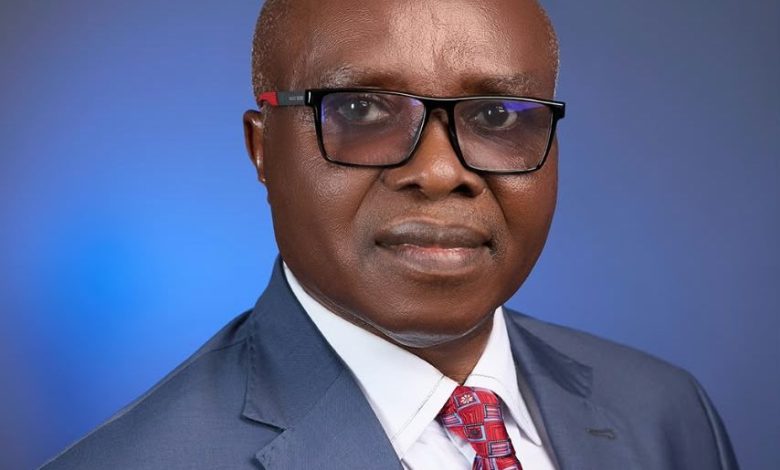
Senior Advocate of Nigeria ( SAN) and renowned public affairs analyst, Barr. Ngozi Olehi has posited that Nigeria could begin to experience a demonstrable economic turnaround within 18-24 months of the emergence of genuinely purposeful, credible and disciplined leadership via the coming elections.
According to him, the recovery process will pave way for a substantial recovery in three to five years while a fundamental transformation of the economy and the living conditions of Nigerians could require seven to fifteen years.
Addressing newsmen in Owerri on the “The Possibility of Economic Transformation: The Challenge of Dubious Leadership,” Barr. Olehi, SAN said Nigeria’s economic predicament, serious as it is, should not be confused with an absence of economic potentials.
He pointed out that the country has considerable natural resources, abundant agricultural opportunities, a large domestic market, an entrepreneurial population, a strategic geographical position and a substantial pool of professional and intellectual talent which are being wasted by cursed leadership, ineptitude and colossal incompetence.
The erudite legal luminary identified inept and corrupt leaders as the nation’s major setback insisting that only strong institutions, not strong personalities will give the country the type of leadership capable of salvaging the current unfortunate situation.
His words, “Nigerians have been consistently scammed by its leaders, particularly in recent years. The nation does not need decades to escape its present economic crises. It requires a few decades to consolidate a fully transformed, prosperous and competitive economy. It is primitivity for the President to be an institution.
“There must be virile institutions that must be stronger than the President and his presidency and this choice is made by the people in an electoral culture that is accountable, transparent and credible.”
Barr. Olehi, SAN lamented that Nigeria, which was the third fastest growing economy by 2015 somersaulted to the rear in all global development indices the moment General Mohammed Buhari(rtd) was sworn in as President because of obdurate and awkward considerations, he did not bother about steering the country to any notable level with the successive one being worse than Buhari left it.
The SAN pointed out that a President with impeccable antecedents, sound economic policies and appropriate legal and institutional frameworks could change the odious direction Nigeria is headed to in months.
He said, “A leadership genuinely committed to national reconstruction can in its first twelve months restore confidence in government, establish fiscal and monetary discipline, abandoned by the current system, dismantle formidable tentacles of corruption and waste which sustain looting spree that characterize the present system, improve security and protect agricultural production, remove arbitrary and anti-investment government practices and publish credible national economic performance indicators adding that these are credible signals of lasting economic survival that will impact of cost of living.”
The legal luminary said that such committed President could, between his first and second year in office formulate and implement policies that could reduce inflation, improve electricity supply and transport infrastructure, expand agricultural productivity, improve access to affordable business finance, restore investor confidence and advance measurable improvements in employment and household purchasing power none of which has been the practicable agenda of governments since 2015.
He further explained that between three and five years in office, a patriotic president would accelerate industrialization, expand manufacturing and non-oil exports, develop agro-industrial value chains, increase skilled employment, strengthen education, healthcare and public institutions and reduce poverty through productive economic activities all of which will lead to glowing economic recovery footprints.
“Within six to ten years, an economy should establish internationally competitive industries, develop technology-driven enterprises, build sustainable export economy, improve the quality of public administration and achieve more widespread prosperity and economic resilience and look forward to entrenching prosperity across generations, build globally competitive institutions, reduce dependence on commodity exports and make economic progress resilient to changes in political leadership all between ten to fifteen years after the basic foundation of the first six months.
“It’s regrettable that instead of following economic principles that can put Nigeria on the path to permanent economic recovery, the political leadership prefer ad hoc measures with unaccountable and extra-budgetary expenditures in respect of which Mohammed Buhari spent over ten trillion naira with one major investigation putting Tinubu’s administration’s palliatives alone at about N4.5 trillion naira in one year and the consequence is that Nigeria as one of the worst governed countries in the world cannot recover in the next fifty years as its corruption ranking and multidimensional poverty profile continue to escalate.
“Governance at all levels globally has become sophisticated, with a President’s or Governor’s antecedents becoming very important because public confidence in the leadership of a country is an economic assert since foreign and domestic investors consider political stability, predictability, respect for contracts, corruption risks and the independence of institutions before committing substantial capital .
He therefore called on Nigerians to use the next general elections to recreate Nigeria by their choice of leaders or risk an irreversible disaster.
Olehi observed that there is no national development consensus that survives changes of government and noted that economic growth that does not create sufficient productive employment may leave the country with impressive GDP statistics but persistent mass poverty which makes it imperative to pursue growth that is substantially faster than population growth and sufficiently employment-intensive to improve per capita incomes.