Improve on free sanitary pad distributions for school girls, child rights activist advises FG
By Everest Ezihe, Asaba
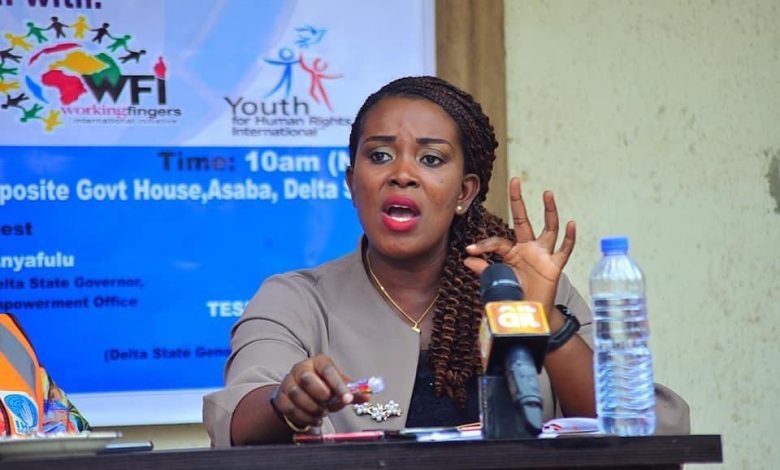
Piqued on the need to improve personal hygienes, especially among young girls in Nigeri of laundry, Barr. Awele Ideal, a prominent lawyer and child rights advocate, has passionately advised the Federal Government through her Ministry of Health to urgently review and strengthen the distribution of free sanitary pads to girls in Nigerian secondary schools, and inline with global order.
Speaking to Journalists recently in Asaba, the capital of Delta State, the legal luminary observed that menstrual health is a core issue affecting girls’ education and dignity, especially for those from low-income families in Nigeria.
The activist reiterated on the need for federal government authorities to ensure that the government-led sanitary pad schemes reach all eligible girls and are administered transparently and effectively, so as to achieve the purpose for which it’s meant for.
“Our girls should not miss school, lose confidence, or be forced to use unsafe alternatives because they cannot afford sanitary products,” Ideal said.
She emphasized that access to menstrual hygiene products is a health necessity and education enabler for young girls across the country.
Ideal thumbed up the recent federal government initiatives that aimed at improving menstrual hygiene and pad availability for schoolgirls, however, she passionately appealed on the need for clear monitoring, regular supply, and inclusion of rural communities in the implementation plans.
It’s pertinent to know, that her clarion call, reflects growing public concerns on menstrual health in Nigeria, thus the necessity for nationwide provision of free sanitary pads to Nigerian secondary schoolgirls, which inadvertently serves as part of the broader health and education intervention Initiative programmes of the federal government.
She also appealed for stronger collaboration between the Ministry of Health, state governments, civil society groups, and community stakeholders to expand awareness and access to menstrual hygiene resources among secondary school girls in Nigeria.
Ideal’s intervention comes amid a wider push by activists and NGOs across Nigeria and beyond for more consistent and inclusive menstrual health policies that support girls’ wellbeing and continued schooling as directed by the United Nations Educational, Scientific and Cultural Organization, UNESCO.