Ibrahim Gusau’s Leadership at the NFF: A Journey of Stability, Unity and Rising Influence
By Clinton Christopher, Abuja
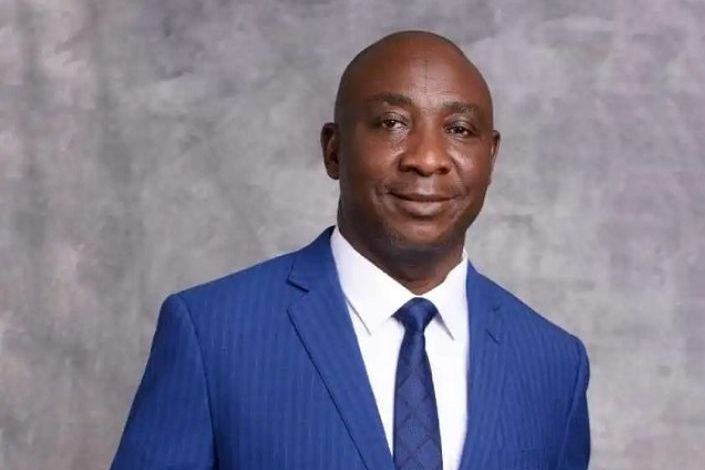
Since assuming office as President of the Nigeria Football Federation (NFF), Ibrahim Gusau has steadily carved out a leadership style defined by calm stabilization, strategic consolidation, and a renewed push for credibility in Nigerian football administration.
At a time when the NFF was grappling with internal disputes, financial uncertainties, and declining public confidence, Gusau’s first major task was to restore stability.
His approach has been largely measured—prioritizing dialogue over confrontation and ensuring that key stakeholders, including league bodies, players, and government institutions, remain engaged.
This stabilizing influence has helped reduce the frequent crises that once dominated the federation’s narrative.
Beyond stability, Gusau has focused on consolidation. Rather than embarking on sweeping, disruptive reforms, his administration has sought to strengthen existing structures within Nigerian football.
From reinforcing relationships with domestic leagues to improving coordination between national teams and administrative units, there has been a visible effort to build continuity.
This method has allowed the NFF to function with greater coherence, even amid lingering structural challenges.
On the international stage, Gusau’s tenure has contributed to rebuilding Nigeria’s global reputation in football governance.
Engagement with bodies such as FIFA and Confederation of African Football has been more consistent, reflecting a commitment to aligning Nigerian football with global best practices.
While results on the pitch remain a separate challenge, administratively, Nigeria is regaining respect as a serious football nation capable of constructive collaboration.
Perhaps one of the most critical pillars of his leadership has been the pursuit of strength and unity.
Nigerian football has historically been fragmented, with recurring tensions among stakeholders. Gusau’s leadership has emphasized inclusiveness, bringing together diverse voices within the football ecosystem.
Though unity is still a work in progress, there is a noticeable reduction in public disputes compared to previous eras, suggesting that internal cohesion is gradually improving.
Closely tied to this is the issue of integrity, an area where Nigerian football administration has often faced scrutiny. Gusau has projected an image of accountability and transparency, seeking to rebuild trust among fans and stakeholders.
While systemic challenges persist, his administration’s tone has shifted toward greater responsibility in financial management and decision-making processes—an essential step in restoring credibility.
All these elements contribute to what can best be described as an ascension phase for the NFF under Gusau. It may not yet be a period of dramatic transformation, but it is one of steady upward movement.
The foundation being laid—through stability, consolidation, and institutional strengthening—positions Nigerian football for long-term growth.
In many ways, Ibrahim Gusau’s leadership reflects a departure from crisis-driven administration to one anchored in gradual progress.
The true test, however, will lie in sustaining these gains and translating administrative stability into tangible success on the pitch. If maintained, his approach could mark the beginning of a more structured and respected era for Nigerian football.