Ohaneze Ndigbo and the Crisis of Igbo Mobilisation: Why Grassroots Democracy Is the Missing Link
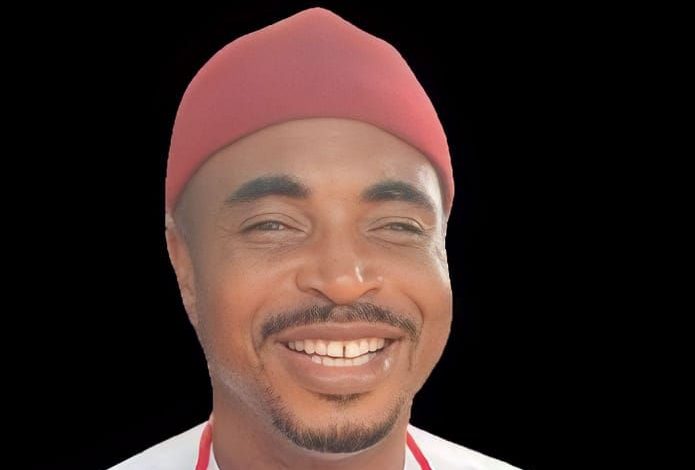
By Dr Obinna Ibe
Center for culture and Grassroot Development ( CCGD ). FCT Abuja
Ohaneze Ndigbo was founded as the apex socio-cultural organisation of the Igbo people, with the lofty mandate of uniting, defending, and advancing Igbo interests wherever they may be found.
Over the years, however, it has struggled to live up to this historic responsibility. Today, it is difficult to argue that Ohaneze Ndigbo has successfully galvanized the Igbo race.
Instead of being a rallying point for collective aspiration and coordinated action, the organisation has become distant from the grassroots, weakened by internal divisions, elite domination, and a lack of democratic legitimacy.
One of the clearest signs of Ohaneze’s failure is its inability to command widespread loyalty among ordinary Igbo people. For many, Ohaneze exists only in the media and during moments of political crisis. Its statements often sound detached from the everyday realities of the Igbo trader, farmer, artisan, student, or professional.
An organisation that truly galvanises a people must be deeply rooted in their lives and struggles. Ohaneze, unfortunately, has remained largely an elite forum, dominated by retired politicians, businessmen, and power brokers who often project personal or sectional interests as collective Igbo positions.
This disconnect is closely linked to how Ohaneze’s leadership emerges. The current structure encourages top-down selection, zoning arrangements, and consensus-building among a narrow circle of influential individuals.
While these methods may reduce open conflict at the top, they undermine legitimacy. Leaders who are not directly chosen by the people cannot genuinely claim to speak for them. As a result, many Igbo youths and grassroots organisations see Ohaneze as irrelevant or compromised, and they look elsewhere for identity, mobilisation, and advocacy.
The consequences of this weakness are profound. In moments when the Igbo nation requires unity—whether in national politics, economic negotiations, security challenges, or cultural preservation—Ohaneze often speaks with a faint, fragmented voice.
It struggles to mobilise mass support, enforce collective decisions, or sustain long-term strategic action. Without a strong internal democratic foundation, unity remains rhetorical rather than real.
One powerful strategy that can restore potency to Ohaneze Ndigbo is the development of a comprehensive, bottom-up electoral system for its leadership.
This would involve the election of Ohaneze chairmen in every autonomous community, who in turn elect leaders at the Local Government, state, zonal, and eventually national and global levels, culminating in the election of the President-General worldwide. Such a structure would fundamentally transform Ohaneze from an elite club into a mass-based movement.
Grassroots elections would give every Igbo person a sense of ownership in Ohaneze. When leaders emerge from the communities, they carry with them the mandate, concerns, and aspirations of the people.
Accountability would naturally increase, as leaders would know they can be voted out by the same grassroots that elected them. This process would also encourage political education, participation, and leadership development across generations, particularly among youths and women who are currently marginalised in Ohaneze affairs.
Moreover, a bottom-to-top electoral system would enhance unity. Instead of imposed consensus, unity would be built organically through participation and shared decision-making. Differences would be debated and resolved through democratic processes rather than through behind-the-scenes bargaining.
This would give Ohaneze moral authority and the numerical strength needed to negotiate effectively within Nigeria and beyond.
In conclusion, Ohaneze Ndigbo’s failure to galvanise the Igbo race is not inevitable; it is structural. The organisation cannot unite a people while remaining disconnected from them. To regain relevance, legitimacy, and strength, Ohaneze must democratise itself by institutionalising grassroots elections from autonomous communities to the global level. Only then can it truly become the collective voice, conscience, and catalyst of the Igbo nation.