Sierra Leone honours Nigerian Wrestling Coach Akuh Purity
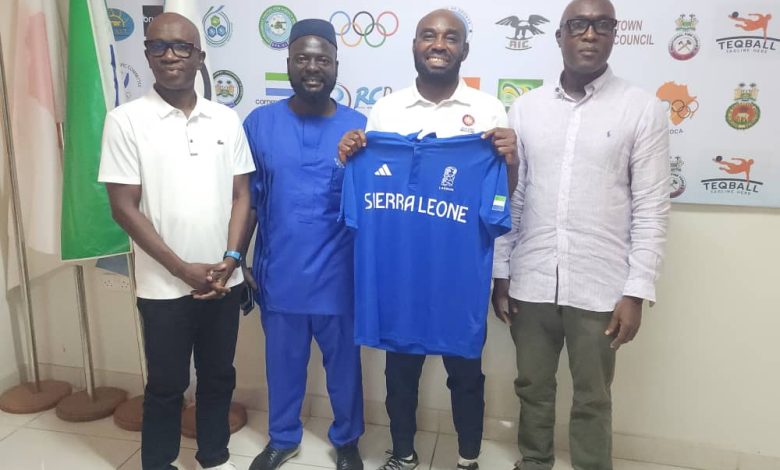
Sierra Leone National Olympic Committee President, Prince Vandy Sually, has honoured Nigeria’s Women National Team coach, Akuh Purity, following his contributions in refining Sierra Leone technical skills, improving tactical awareness, and raising overall performance standards.
The Sierra Leone Olympic Committee President presented Akuh Purity with the country’s complete national team tracksuit as a symbol of gratitude and honour after the conclusion of the training camp
This further states Nigeria’s immense contribution to wrestling growth in Africa after Akuh Purity was invited as an educator by the World Wrestling Governing body (UWW) to support the development of wrestling in Sierra Leone, a mission both meaningful and historic, as it focused on building sustainable structures for the growth of the sport across the country.
During the training camp, Akuh Purity traveled extensively across key regions in Sierra Leone, such as Makeni, Bo District, Port Loko, Kenema and the capital, Freetown, where he conducted training camps and development workshops aimed at strengthening wrestling at both grassroots and national levels.
Akuh Purity said “I was honoured as an educator by the United World Wrestling to support the development of wrestling and the major focus of my work was training the national team—refining their technical skills, improving tactical awareness, and raising their overall performance standards to align with international expectations.”
“Beyond the national squad, I was able to identify and discover promising young talents with strong potential to represent Sierra Leone on the continental and world stage.”
“This journey was more than just conducting training. It was about laying a foundation for sustainable growth, thereby strengthening coaching education, referee development, and athlete identification.”
“I worked closely with local leadership in the country to introduce a better system for athlete’s progress, competition planning, and long-term performance pathways.”
Meanwhile, at the end of development training, coaches received specialized education sessions designed to modernize their training methods, while referees underwent certification workshops to improve rule interpretation, match management, and officiating standards in line with international guidelines.