American Journalist Tasks Nigerian Government Over Poor Stadium Infrastructure, Calls for Urgent Action
American journalist Thomas Smith has bemoaned Nigeria’s poor football infrastructure, particularly the lack of modern stadiums and training facilities capable of hosting major international competitions, describing the situation as one of the factors affecting the development of the game in the country.
Smith, a veteran journalist, made the remarks while reacting to concerns over Nigeria’s struggles to consistently qualify for major international tournaments and its increasing reliance on stadiums in other countries for international fixtures.
According to him, Nigeria, despite its huge population and status as the “Giant of Africa”, has failed to provide sufficient modern football facilities that meet international standards.
He compared Nigeria’s situation with countries such as Morocco, South Africa and Kenya, which he said have invested significantly in football infrastructures and are consequently better positioned to host major Confederation of African Football (CAF) competitions.
“Nigeria has a population of 243 million people, but one shocking thing is that they do not have a modern stadium and training facilities,” Smith said.
He added: “Kenya’s population is about 40 million, which is a sixth of Nigeria’s, but those guys have modern stadiums. I wonder what is stopping 243 million people from building decent stadiums and modern training facilities.”
Smith argued that Nigeria should not accuse CAF of bias when major tournaments are awarded to countries with facilities that meet the required standards.
He maintained that the availability of suitable stadiums and other sporting infrastructure remains an important consideration in determining where major continental competitions can be staged.
The American journalist said Nigeria’s repeated dependence on foreign venues for crucial international fixtures was embarrassing and urged the government to end the practice.
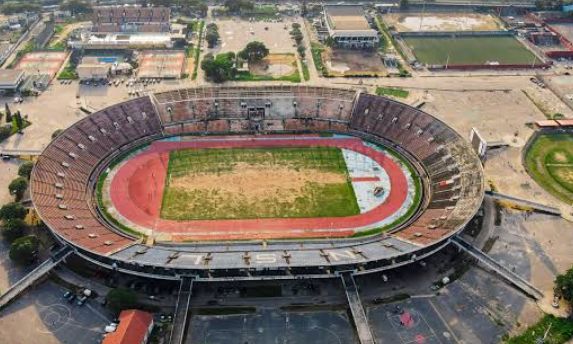
“That is why they are first to complain when tournaments are taken to Morocco or South Africa, saying that CAF is biased. How is CAF biased? Do you want them to host a tournament in a stadium that looks like a farm?” he queried.
Smith further linked Nigeria’s infrastructure challenges to broader problems affecting the country’s national teams, arguing that inadequate football development structures could hinder the production of homegrown talent and weaken the connection between players and the national teams.
He also raised concerns about Nigeria’s increasing reliance on foreign-based players, suggesting that some players invited from abroad may not possess the same emotional attachment to the national team as players developed within the country.
“I watched one of their matches and close to half of those players couldn’t sing their national anthem. Do you think those guys will be passionate when playing for the national team?” he asked.
Smith urged Nigerians to hold the government accountable for the state of football infrastructure, stressing that modern stadiums and training facilities should be treated as essential national sporting assets rather than facilities that are only upgraded when the country is preparing to host a major event.
“Nigerians need to hold your government responsible for you to have football facilities. This idea of borrowing training facilities during qualifiers must end,” he said.
Smith warned that failure to address the infrastructure deficit could have long-term consequences for Nigerian football, including limiting the country’s ability to host major continental competitions and affecting its capacity to consistently qualify for major international tournaments.
He therefore called for urgent and sustained investment in stadiums, training centres, grassroots football facilities and other sporting infrastructure across the country.
According to him, Nigeria’s reputation as a football powerhouse must be supported by modern facilities and a clear long-term development strategy if the country is to reclaim its position among Africa’s leading football nations.