National Grassroots Sports Summit 2026: Building a New Pathway for Nigeria’s Sporting Future
Nigeria’s search for a more sustainable sporting future will take centre stage in Abuja as stakeholders prepare for the National Grassroots Sports Development Summit 2026, a strategic national gathering aimed at strengthening the foundation of sports development and creating a clearer pathway for discovering, nurturing and progressing sporting talents across the country.
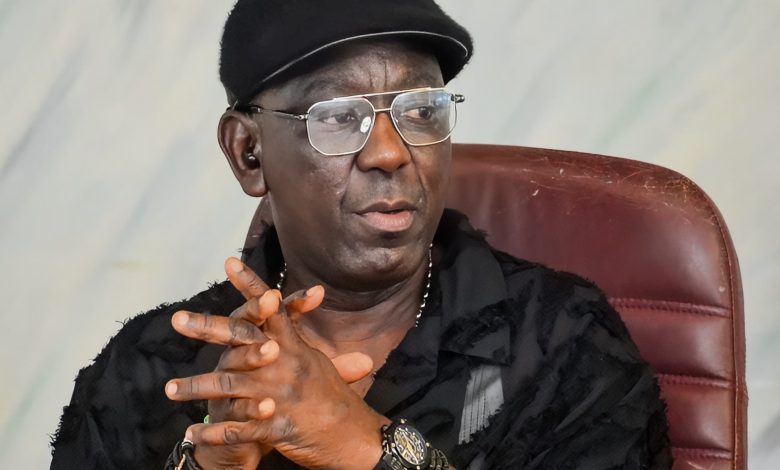
Scheduled for November 18 and 19, 2026, at the Banquet Hall, State House, Presidential Villa, Abuja, the Summit is being organised by the Office of the Senior Special Assistant to the President on Grassroots Sports Development, Prince Adeyinka Adegboye, under the theme: “Creating a New Pathway for Sustainable Grassroots Sports Development.”
At the heart of the Summit is a simple but important understanding: grassroots sports is where the journey of most sporting careers begins.
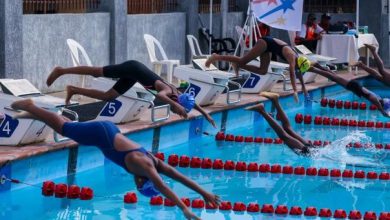
Grassroots sports refers to organised sporting activities at the community, school, local government and other entry-level settings where young people are given the opportunity to participate, develop skills, compete and potentially progress into higher levels of sport.
It is the foundation upon which elite sports is built.
Before an athlete represents Nigeria at the African Games, the Olympics, World Championships or other international competitions, there is usually a starting point—a school field, a community pitch, a local competition, a coach who identified potential, or a young athlete who was simply given an opportunity to participate.
For Nigeria, therefore, grassroots sports is not just about winning medals. It is about creating opportunities for young Nigerians to discover their abilities, receive proper training, stay engaged in productive activities and pursue a structured sporting career.
The Summit comes at a crucial period when the conversation around reforming Nigerian sports has increasingly shifted towards the need for stronger structures, improved facilities, better competitions and sustainable talent-development programmes.
Nigeria has produced generations of exceptional athletes who have distinguished themselves on the continental and global stages. Yet, beneath those successes remains a fundamental challenge: thousands of talented young Nigerians in schools, communities and local government areas still lack structured opportunities to be discovered, trained and properly developed.
The National Grassroots Sports Development Summit seeks to confront this challenge by encouraging a more coordinated approach to grassroots sports development.
Rather than treating grassroots sports as occasional competitions, talent hunts or isolated sporting activities, the Summit will promote a system in which talent identification is connected to coaching, education, facilities, regular competition, athlete welfare and a clear progression pathway to elite sports.
One of the major conversations, “Grassroots Sports Development in Nigeria: Challenges and Way Forward,” will examine the obstacles that have limited the country’s ability to fully harness its enormous sporting population and identify practical solutions for building a stronger grassroots sports system.
Another keynote discussion, “The Game Changer: How Sports Rescues Youth and Builds Nations,” will broaden the conversation beyond medals and trophies to examine sports as an instrument for youth empowerment, employment, education, social inclusion, national unity and economic development.
This is particularly important in a country with a large and youthful population. Properly structured grassroots sports can provide young people with opportunities to develop discipline, teamwork, leadership, confidence and valuable skills, while also opening pathways to education, professional careers and entrepreneurship within the wider sports ecosystem.
The Summit is expected to bring together representatives of government at different levels, sports federations, educational institutions, coaches, athletes, former internationals, academies, corporate organisations, development partners, traditional institutions, community stakeholders and the media.
Corporate Nigeria will also have an important role to play, as sustainable grassroots sports development requires investment beyond government funding. Support is needed for sporting facilities, equipment, competitions, coaching programmes, scholarships, talent identification and athlete development.
The Summit, therefore, presents an opportunity to move the national conversation from “Who are our next champions?” to a more fundamental question: “What system are we putting in place to discover, develop and support those champions?”
Ultimately, the National Grassroots Sports Development Summit is about ensuring that talent does not remain hidden simply because a young Nigerian was born in a community without the necessary facilities, coaching or opportunities.
It is about creating a system where a talented child discovered in a school, community or local government area can be identified, nurtured, educated, trained and given a realistic opportunity to progress—from the grassroots to the national stage and, ultimately, to the world.
The vision is to build a Nigeria where talent is not left to chance, opportunity is not determined by location, and the next generation of sporting stars can emerge from every part of the country.
November 18–19, 2026, therefore represents more than another gathering in Abuja. It is an opportunity to begin building a coordinated national pathway for grassroots sports development and to place the development of Nigeria’s sporting future firmly where it belongs: at the grassroots.