Nigeria, FIFA agree on comprehensive NFF reform – NSC Boss, Dikko
By Maxwell Kumoye
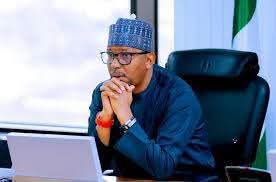
The Chairman of the National Sports Commission (NSC), Mallam Shehu Dikko, has disclosed that Nigeria is set to embark on a comprehensive reform of the Nigeria Football Federation (NFF), following consultations with world football governing body FIFA and the Confederation of African Football (CAF).
Dikko said the reform became necessary after the resignation of the entire NFF board and the General Secretariat, which created a legal vacuum because the federation’s existing statutes did not provide for a situation where no recognised body was left to run its affairs.
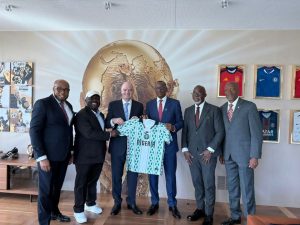
According to him, the Nigerian government immediately approached FIFA to explain the situation and seek a lawful way forward.
“After the resignation of the entire board of the NFF and the General Secretariat, naturally, we had a lacuna because there was no provision in the rule book for a situation where nobody was left to legally run the NFF within the framework of the existing rules,” Dikko explained.
He disclosed that FIFA subsequently invited Nigerian officials to a meeting involving senior FIFA officials, CAF representatives and legal experts to discuss both the immediate crisis and the government’s broader plan to reform football administration in the country.
Dikko said FIFA and CAF acknowledged that the need for structural reform in Nigerian football was not a new issue, noting that successive administrations had attempted to address the problems without achieving the desired result.
He specifically recalled efforts under the administrations of former Presidents Olusegun Obasanjo, Umaru Musa Yar’Adua, Goodluck Jonathan and Muhammadu Buhari.
“This is something FIFA knows has been on the cards for decades in Nigeria. It did not start today,” he said.
Dikko said the government presented comprehensive reform proposals based on concerns raised by stakeholders and an assessment of the challenges confronting Nigerian football.
He added that FIFA effectively endorsed the reform process, while stressing that it must be conducted through the proper procedures and within the applicable football regulations.
“They agreed that the reform must happen, but it has to go through the proper process and within the framework of the relevant rules. They also made it clear that they are ready to accommodate that process,” he said.
The NSC chairman also stressed that FIFA recognised the role of government as a major stakeholder in the development of sports, given its responsibility for infrastructure, funding and security.
With the framework now established, Dikko said stakeholder consultations had commenced, with members of the NFF Congress already receiving the government’s reform blueprint for scrutiny and input.
He disclosed that FIFA and CAF are expected to visit Nigeria for an on-spot assessment, after which broader consultations will be held to review and fine-tune the reform proposals.
A key component of the process, according to Dikko, will be the establishment of a Normalization Committee to oversee the federation during the transition.
He said the committee could remain in place for three months, six months or even a year, depending on the scope and complexity of the reforms.
Dikko emphasised that members of the committee must be independent and free from conflicts of interest.
“They will have to be individuals who are not conflicted and are independent, people who have no personal interest in anything to do with the NFF going forward,” he said.
The Normalization Committee, he explained, would be responsible for reviewing the relevant statutes, implementing agreed reforms and eventually conducting elections to usher in a new NFF leadership.
However, Dikko warned that the breadth of the proposed reforms means not everything may be achievable during the lifespan of the Normalization Committee.
He said the reform programme would therefore be divided into immediate, medium and long-term objectives, with clearly defined responsibilities for the interim administration and the elected leadership that follows.
“There will be an agreement involving the Nigerian government, FIFA and CAF that whoever emerges as president must continue along this reform path and ensure that the reforms are fully implemented within the agreed framework,” Dikko stated.
The NSC chairman expressed optimism that the process would proceed smoothly, saying the commencement of stakeholder consultations represents the first major step towards restructuring the administration of Nigerian football.
He said the ultimate objective is not merely to resolve the current leadership vacuum but to establish a stronger and more sustainable football governance structure in Nigeria.