
Uzodimma Identifies AI as Key Tool for Educational Development
..Says Teachers Are the Engine Room of Professional and Sectoral Development
By Everest Ezihe, Ihitte Uboma
Governor Hope Uzodimma of Imo State has identified Artificial Intelligence (AI) as an important tool for educational development in the 21st century, stressing that teachers remain the foundation upon which every other profession and sector of the economy is built.
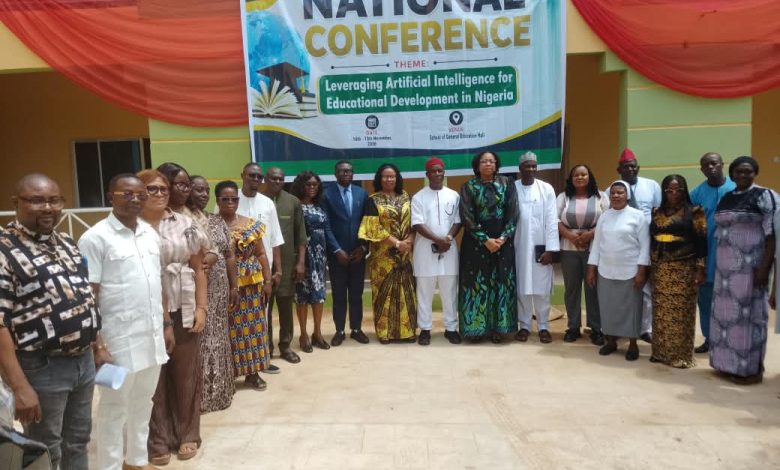
Uzodimma stated this on Thursday while addressing participants at the maiden three-day National Conference organised by the School of General Education of Benjamin Uwajumogu (State) College of Education (BUSCED), Ihitte Uboma, Imo State.
The conference, which had the Governor as its Distinguished Visitor, was held under the theme, “Leveraging Artificial Intelligence for Educational Development in Nigeria.”
The Governor, who was represented by the Imo State Commissioner for Tertiary and Technical Education, Prof. Victor Nwachukwu, commended the institution for initiating the conference, describing it as a demonstration of institutional vision, academic commitment and determination to contribute meaningfully to the advancement of education in Nigeria.
He noted that the conference theme was timely and relevant, considering the rapidly changing global environment, where Artificial Intelligence is increasingly influencing how knowledge is created, accessed, delivered and evaluated.
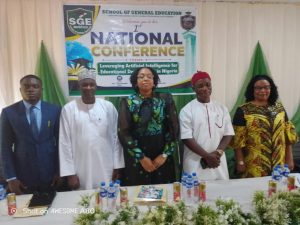
The Governor advised Nigerian teachers that their responsibility was not merely to embrace emerging technologies but to understand how best to deploy them to improve teaching, strengthen research, expand learning opportunities and prepare students for the demands of an increasingly digital society.
He, however, cautioned that the adoption of AI must be accompanied by adequate consideration of ethical issues, particularly data privacy, security, accessibility and the responsible use of technology.
Uzodimma, while applauding the choice of BUSCED as the venue for the maiden national conference, reiterated that Colleges of Education occupy strategic positions in Nigeria’s educational development because teachers remain the foundation upon which every other profession and sector is built.
He expressed optimism that the conference would provide an opportunity to examine how emerging technologies could enrich teacher education, improve curriculum delivery and strengthen the capacity of Nigerian educators to respond effectively to contemporary challenges.
He further emphasised that for Nigeria to achieve meaningful educational transformation through Artificial Intelligence, teacher-training institutions must be actively involved in shaping the process.
Earlier in her welcome address, the Acting Provost and Chief Host of BUSCED, Dr. Mrs. Maryrose Chinyere Nwachukwu, expressed appreciation to the distinguished personalities and major stakeholders in the nation’s education sector who attended the conference.
Among them were the Commissioner for Tertiary and Technical Education, Prof. Victor Nwachukwu; the Special Adviser to the Governor on Education Intervention Programmes, Hon. Mrs. Esther Ukachukwu; and the Chairman of the occasion and distinguished keynote speaker, Prof. John Undie, who was unavoidably absent and represented by Dr. Kareth Omorobi.
Others included the lead paper presenter and Provost of Isa Kaita College of Education, Katsina State, Dr. Ismaila Ado Funtua; members of the institution’s management; the Dean of the School of General Education; other deans, staff and students, as well as participants who travelled from different parts of the country and those who joined virtually.
Dr. Nwachukwu described the inaugural conference as more than a ceremonial gathering, saying it marked the beginning of an academic tradition that would provide a platform for research, intellectual exchange, professional collaboration and practical solutions to Nigeria’s educational challenges.
She observed that Artificial Intelligence was changing how people communicate, access information, conduct research and solve problems, stressing that education could not remain outside these developments.
According to her, discussions on AI should go beyond whether schools should adopt the technology to examining the educational problems it could solve, the skills required by teachers and learners, measures for protecting students and ways of preventing its adoption from widening existing inequalities.
She particularly advised participants that all AI-generated information, references and research outputs must be verified for accuracy and relevance to approved curricula.
”AI should strengthen the teacher’s capacity. It should not replace the teacher. Human understanding, professional judgment, classroom relationships, discipline and sensitivity to individual learners remain central to meaningful education,” she said.
The Acting Provost maintained that Colleges of Education had a special responsibility to prepare future teachers for technology-influenced classrooms and support serving teachers through continuous professional development.
She encouraged participants to examine the implications of AI for personalised learning, research, institutional management and teacher development, with a view to generating realistic, affordable and sustainable recommendations applicable to different Nigerian educational contexts.
Nwachukwu also urged participants to engage in serious scholarly discussions, share evidence, identify practical solutions and build professional partnerships that would extend beyond the conference.
She insisted that the success of the conference should not be measured merely by certificates and photographs but by the lasting contributions, its recommendations would make to classrooms, teacher education and educational institutions.
Nwachukwu further expressed profound gratitude to Governor Hope Uzodimma for his administration’s immense support to the College, while also appreciating the Commissioner for Tertiary and Technical Education and the Special Adviser to the Governor on Education Intervention Programmes for their encouragement and continued support.
Also speaking in her welcome address, the Dean of the School of General Education, BUSCED, Dr. Bernadette Okonkwo, thanked the distinguished stakeholders who attended the conference and urged them to participate actively in the discussions for the overall improvement of their knowledge and transformation of the nation’s educational system.
She particularly commended Dr. Nwachukwu for her sterling leadership, commitment and transformational initiatives in the institution.
In the keynote address delivered on his behalf by Dr. Kareth Omorobi, Prof. John Undie, a Professor of Educational Administration and Planning, former Acting Provost of the College of Education, University of Calabar, and consultant to the Federal Ministry of Education on Millennium Development Goals, said Artificial Intelligence was rapidly redefining the future of education, the global knowledge landscape and humanity in general.
He explained that the subject was not merely about computers, software or technological innovations but also about the future of knowledge, the transformation of human intelligence, the democratisation of educational opportunities, the survival of educational institutions and Nigeria’s capacity to compete in the increasingly intelligent global knowledge economy.
Undie argued that AI should not be regarded as a substitute for teachers, professors or educational institutions but deliberately harnessed as a strategic instrument for improving the quality, accessibility, equity, relevance, efficiency and global competitiveness of Nigeria’s education sector.
He allayed the fears of educationists who might feel threatened by the emergence of Artificial Intelligence, insisting that the technology was not designed to replace teachers completely.
According to him, educators should instead understand how to adapt, recalibrate and acquire the necessary skills to deploy AI facilities in enhancing efficiency, effectiveness and service delivery to students and society at large.
The keynote speaker described AI as an educational solution capable of supporting development across various sectors, including the economy, commerce and other areas of human endeavours.
He therefore urged educators, who are responsible for producing the manpower required in these sectors, to take the lead in adopting and utilising AI technologies.
The educational expert explained that educational development involved the growth of educational institutions and deliberate efforts to improve the quality of education at the primary, secondary and tertiary levels.
Undie further described AI as an innovative technological application capable of improving teaching, assessment, research, curriculum development and the quality of graduates.
He said the conference was particularly important because it would expose lecturers to better ways of applying AI facilities to enhance their professional service delivery and contribute to overall educational development.
He further maintained that the rise and fall of any nation depended largely on its educational development policies and the quality of investment in advancing her educational institutions.
While acknowledging that Nigeria’s National Policy on Education recognises education as an instrument for accelerated development, he stressed that no nation could rise above the quality of its educational institutions and the level of investment in the sector.
He listed personalised learning, intelligent tutoring, curriculum development, educational administration, assessment, research, teacher professional development and evidence-based policymaking among the areas where AI was creating unprecedented opportunities for global educational transformation.
In his contribution, the lead paper presenter, Dr. Ismaila Ado Funtua, Provost of Isa Kaita College of Education, Dutsin-Ma, Katsina State, commended the organisers for recognising the importance of Artificial Intelligence in modern educational development.
He urged participants to concentrate on how best to harness the technology to maximise its benefits in advancing themselves and the nation’s educational system.
Funtua observed that AI represented one of the most significant technological transformations of the 21st century, adding that Nigeria, as a country aspiring to global relevance, could not afford to be left behind.
He noted that developed countries and even smaller nations were already adapting to the technology, insisting that Nigeria must embrace AI to remain relevant in an increasingly technology-driven world.
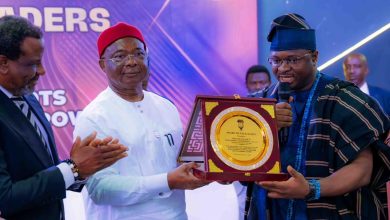
Highlights of the conference included the presentation of an Award of Excellence to Dr. Mrs. Maryrose Chinyere Nwachukwu, the Acting Provost of BUSCED and a vote of implicit confidence passed on her and her administration by the institution’s Students’ Union Government (SUG), led by its 6th President, Comrade Andrew Okwuolisa Chikado.
Another major highlight was the unveiling and launching of the maiden edition of The Educator’s Horizon: Journal of Contemporary Innovative Pedagogy, published by the School of General Education, Benjamin Uwajumogu State College of Education, Ihitte Uboma.