Yobo enters football reform circle as Dikko widens stakeholder consultations
By Maxwell Kumoye and Oluwatobiloba Zeal-Adepetu Kumoye
The Federal Government’s drive to reshape Nigeria’s football administration has taken another significant step with former Super Eagles captain Joseph Yobo joining the stakeholder consultations being led by the National Sports Commission (NSC).
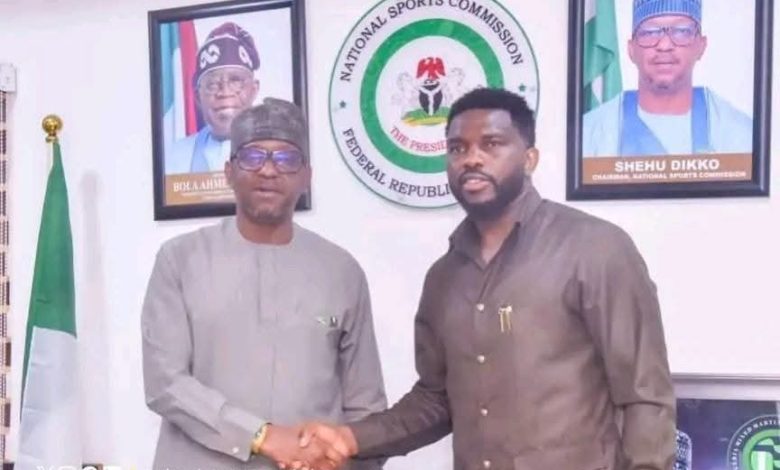
Yobo, Special Technical Assistant to President Bola Ahmed Tinubu on Professional Football Development, met with NSC Chairman Mallam Shehu Dikko on Tuesday as the commission continues to examine the structures, policies and business models underpinning Nigerian football.
Although details of the discussions were not made public, the engagement is significant coming at a time when the government is pushing for comprehensive reforms of the country’s football ecosystem rather than isolated interventions.
The meeting centred on strengthening the structures around Nigerian football, improving its viability and unlocking the enormous commercial potential of the game under the Renewed Hope Initiative for Nigerian Sports Economy (RHINSE).
The NSC says, the challenge extends beyond what happens on the pitch.
Nigeria has produced generations of elite footballers and remains one of Africa’s biggest football markets, yet questions over administration, infrastructure, talent development, financing, league structures and the commercial exploitation of football assets have continued to dominate discussions around the sport.
Yobo’s involvement therefore adds a different perspective to the reform conversation.
As Nigeria’s first centurion at international level, Yobo understands the national-team environment from the inside, having earned 100 caps and captained the Super Eagles to the 2013 Africa Cup of Nations title.
His current role as the President’s technical aide on professional football development also places him at the intersection of government policy and the professional game.
The Dikko-Yobo engagement is part of the NSC’s broader consultations with stakeholders whose experience could help shape a more sustainable football system.
But beyond consultations, the success of the reform agenda will ultimately depend on whether the government can translate recommendations into structural changes that survive beyond individual personalities and administrations.
The immediate task is therefore not simply to identify what is wrong with Nigerian football, but to establish a system capable of generating sustainable revenue, developing talent, strengthening domestic competitions and restoring confidence in the administration of the game.
The NSC says the process is aimed at implementing President Tinubu’s directives for comprehensive reforms of Nigerian football.
With former players, administrators and other stakeholders now being brought into the conversation, attention will increasingly shift to what the government eventually puts on the table and whether the proposed reforms can deliver the fundamental reset Nigerian football has long demanded.