Imo East Senatorial District Election 2027 (OWERRI ZONE) : Enter His Excellency, Prince Eze Madumere MFR, Who The Cap Fits
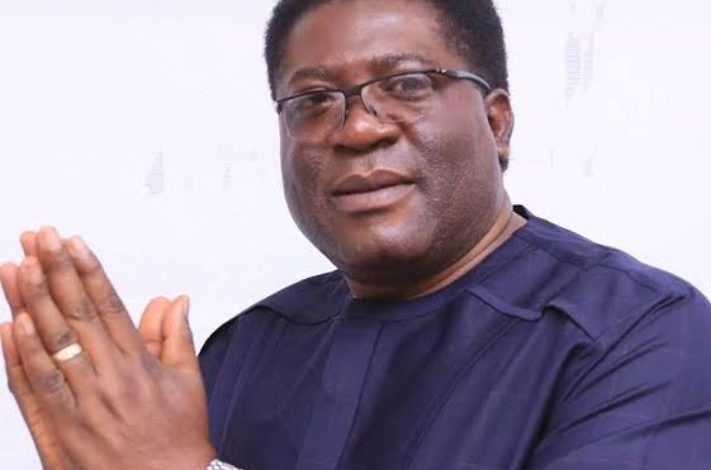
IT WAS A CHANCE LIKE MEETING AFTER MANY YEARS AND THIS INFORMAL ENCOUNTER ENSUED.
Truth about His Excellency, Prince Eze MADUMERE, MFR remains his disarmingly unassuming nature.
He doesn’t carry air around himself despite his Royal background.
His servant leader status like remains evergreen.
As an intelligent and calculated smart administrator he did justice to the QUESTIONS our Board of Editors posed to him with all ease.
It was VINTAGE, Prince Eze MADUMERE, MFR.
Dear readers Enjoy this Delicious and Delightful Unpitdownable, Frank, Well Articulated Chat with One Who Knows The Terrain of how great and people’s oriented representation ought to be and patterned too. Whole Truth about representation happens in practical terms.
We called him the true face of how representation of the people should be and so Enter the amiable Senatorial candidate of lmo East — Owerri Zone, His Excellency, Prince Eze MADUMERE, MFR is the man Oooo!!
THE EXCLUSIVE CHAT WITH HIS EXCELLENCY, PRINCE EZE MADUMERE, MFR
PDP Senatorial Candidate for Imo East Senatorial District (Owerri Zone)
E…N..J..O..Y..
Q. His Excellency, please introduce yourself to our readers.
My name is His Excellency, Prince Eze Madumere, MFR. I am a Nigerian businessman, administrator, democrat, and public servant who has had the privilege of serving Imo State as Chief of Staff to the Governor and subsequently as Deputy Governor.
I came from a royal family, but I have always believed that leadership is not about titles, positions, or privilege. It is about responsibility, sacrifice, and the willingness to make life better for the people you serve.
My background in business, including my years of experience with PepsiCo (KFC) in the United States, exposed me to the values of discipline, organisation, accountability, and performance. I brought these values into public service, where I had the opportunity to contribute to governance and the development of Imo State.
Today, I am seeking to represent the good people of Imo East Senatorial District, otherwise known as Owerri Zone, in the Nigerian Senate. I am motivated by a conviction that our people deserve an experienced, accessible, and purposeful representative who understands their challenges and has the capacity to articulate their interests at the national level.
For me, this is not simply a political ambition. It is a call to greater service.
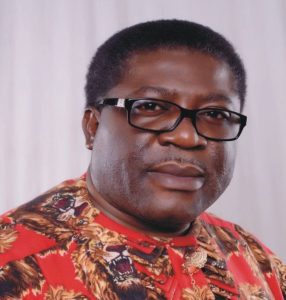
Q(ii). You were Deputy Governor, and now you are vying for the Upper Legislative Chamber. What else do you want, sir?
I understand why people ask this question, and I respect it. However, I believe we must distinguish between the pursuit of political positions for personal ambition and the acceptance of responsibility in response to the needs of the people.
I have served Imo State as Chief of Staff and Deputy Governor. That experience gave me valuable insight into government, public administration, and the relationship between policy decisions and the everyday realities of our people. But public service does not end when one leaves office.
The Senate is a different institution with different responsibilities. It offers an opportunity to contribute to national legislation, exercise oversight, influence budgetary priorities, and advocate for the development of my senatorial district.
I am not seeking the Senate seat because I believe I must remain in power. I am seeking it because I believe my experience can still be useful to my people.
There is a difference between wanting power for oneself and seeking a platform to serve others. My ambition is to make the experience I have acquired over the years count for the benefit of Owerri Zone.
If the people entrust me with their mandate, my responsibility will be to justify their confidence through service, representation, and measurable results.
Q. How do you currently rate the political platform, the PDP, which you intend to use to realise your senatorial ambition in Imo State?
I remain confident in the People’s Democratic Party (PDP) as a political platform for democratic governance and the pursuit of a better Nigeria.
The PDP has a significant history in Nigeria’s democratic development. Like every major political party, it has faced internal disagreements and organisational challenges. However, political challenges should not make us lose sight of the importance of institutions, party discipline, reconciliation, and respect for democratic processes.
I believe the strength of a political party is not determined solely by the individuals who occupy public offices at a particular time. It is also determined by its structures, its members, its values, and its capacity to offer Nigerians a credible alternative.
In Imo State, I believe the PDP has the opportunity to rebuild, unite its members, reconnect with the grassroots, and present a compelling programme to the electorate.
My responsibility as a candidate is to contribute to that process by engaging our people, articulating their concerns, and demonstrating that the PDP can be a vehicle for responsible representation.
I am confident that with unity, discipline, effective mobilisation, and a message that addresses the genuine needs of the people, the PDP can compete strongly in Owerri Zone.
Q. Which PDP are you?
Let me make this very clear: there is only one PDP that I belong to.
The PDP does not have different versions from which I am expected to choose. My party is the People’s Democratic Party, led by Hon. Abdulrahman Mohammed as National Chairman, with Senator Samuel Nnaemeka Anyanwu as National Secretary and Chief Barr. Nyesom Wike as the National Leader of my party.
These are the leaders I recognise as the leadership of my party, and I stand firmly with the PDP under their leadership.
I believe that political parties are institutions that must be guided by their recognised leadership, constitutional provisions, and established democratic processes. Members cannot afford to allow personal disagreements or competing interests to become more important than the collective future of the party.
My commitment is to the PDP, its ideals, its members, and its mission to provide credible leadership for Nigerians.
I am a PDP man, and my focus is on building unity, mobilising our supporters, and winning the confidence of the good people of Owerri Zone.
Q. With Imo State firmly under the control of Governor Hope Uzodinma, how do you hope to survive his incumbent onslaught, which may resemble an impending hurricane?
First, I do not underestimate the advantages that come with incumbency. A sitting governor has access to the instruments and visibility of government, and it would be politically naïve to pretend otherwise.
However, elections in a democracy are not supposed to be determined solely by the power of incumbency. They should be determined by the will of the people, the credibility of the candidates, the strength of their ideas, and the electorate’s assessment of who can best represent their interests.
I am not going into this contest with bitterness against Governor Hope Uzodinma, nor am I approaching it with fear. This is a democratic contest, and I intend to conduct myself with maturity, dignity, and respect for the electorate.
My strength lies in my record of public service, my understanding of governance, my relationships across Owerri Zone, and my determination to give our people effective representation.
I have served in government, and I understand how government works. I also understand that the Senate is not an extension of the Government House. It is a constitutional institution with its own responsibilities and independence.
My campaign will be built around the people: their concerns about roads, employment, education, healthcare, agriculture, security, and economic opportunities. I will take that message to our communities, markets, villages, town unions, professional groups, women, and young people across the nine local government areas of Owerri Zone.
The hurricane I am concerned about is not a political opponent. It is the hurricane of unemployment, poverty, inadequate infrastructure, and the feeling among many of our people that their voices are not being heard.
That is the challenge I want to confront.
Ultimately, I believe the people of Owerri Zone have the wisdom to make their choice. My task is to earn their trust and present a credible alternative.
Q. You were once the number two citizen of Imo State. How has life been outside power?
Life outside public office has been a period of reflection, learning, and a deeper appreciation of the people.
Public office is temporary. What matters is how one uses the opportunity when it comes and what remains of one’s service when the office is gone.
I have never believed that a person’s relevance should disappear simply because he is no longer occupying a government position. One can continue to contribute to society through mentorship, community engagement, private enterprise, and support for people who need assistance.
My experience outside office has also strengthened my understanding of the economic and social difficulties confronting ordinary families. When you are closer to the people, you hear their concerns directly: the young graduate searching for a job, the trader struggling with rising costs, the farmer seeking access to markets, and the parent making sacrifices to educate a child.
These are not merely political talking points. They are real human experiences.
I have remained committed to my relationships, my community, and the principles that informed my years in public service. I have also had time to reflect on what can be done differently and more effectively.
I do not see life outside power as a period of irrelevance. I see it as a reminder that leadership is a responsibility, not a permanent entitlement.
Q. By the grace of God, you will be in the Senate. What priority areas will receive your attention for Owerri Zone?
My legislative agenda will be guided by the practical needs of our people and the constitutional responsibilities of the Senate. I want representation that goes beyond appearances and speeches to purposeful legislation, effective oversight, and sustained advocacy.
My priority areas will include the following:
1. Road infrastructure and rural connectivity
I will advocate for federal intervention in critical roads and infrastructure linking our communities, markets, agricultural areas, and economic centres. I understand the importance of rural access roads and the role they play in trade, agriculture, transportation, and community development.
2. Youth employment and economic empowerment
Our young people need opportunities to become productive and independent. I will support initiatives that promote vocational training, entrepreneurship, digital skills, technical education, and access to opportunities in the private sector. I will also advocate for transparent, accessible programmes that reach deserving young people across all nine local government areas.
3. Women empowerment and enterprise development
Women are central to the economic survival of many households in Owerri Zone. I will support policies and programmes that improve access to skills, business development support, cooperative financing, and opportunities for women-owned enterprises.
4. Education and human capital development
I will promote legislative and budgetary measures that improve access to quality education, technical training, and employable skills. Our children and young people must be prepared for a changing economy.
5. Healthcare and social welfare
I will advocate for stronger primary healthcare, improved access to essential medical services, and appropriate federal interventions for vulnerable members of our communities.
6. Agriculture and rural economic development
Owerri Zone has considerable agricultural potential. I will pursue policies and partnerships that improve access to agricultural inputs, processing facilities, storage, financing, and markets, thereby making farming more profitable and attractive to young people.
7. Security and community safety
I will support effective legislation, responsible oversight, and collaboration among relevant security agencies and community institutions to improve public safety and protect lives and property.
8. Federal presence and development projects
I will work to attract federal projects, programmes, and institutions to Owerri Zone where justified by need, feasibility, and the national interest. Our people deserve fair consideration in the distribution of development opportunities.
9. Oil-producing communities and environmental concerns
Communities in areas such as Ohaji/Egbema, Oguta and Oru East deserve sustained attention to environmental protection, infrastructure, economic opportunities, and other development concerns. I will advocate for fair treatment and the effective implementation of relevant laws and policies.
Beyond these priorities, I will maintain an open-door approach to representation. My constituents should be able to reach their senator, communicate their concerns, and receive feedback on what is being done.
I must also emphasise that the Senate is not a local government works department. I cannot promise to personally execute every road, employ every graduate, or solve every problem with a wave of the hand. What I can promise is purposeful legislation, rigorous oversight, strategic advocacy, and the pursuit of partnerships and resources that can make a tangible difference.
My commitment is to ensure that Owerri Zone has a voice that is informed, accessible, active, and respected at the national level.
Q. Tell our readers and your supporters about your chances of winning the seat.
I am confident about my chances, but I do not believe that elections should be won through boastful declarations. They should be won through the confidence of the people, credible engagement, effective organisation, and a convincing record of service.
I am encouraged by the relationships I have built over the years and the conversations I continue to have with people across Owerri Zone. My campaign is reaching out to communities, political stakeholders, traditional institutions, professionals, traders, farmers, women, young people, and ordinary citizens whose voices must count in the democratic process.
I also believe that my experience in government gives me an understanding of the work ahead. I know that representation requires more than political visibility. It requires preparation, sound judgment, negotiation, legislative competence, and the ability to build relationships in pursuit of the public interest.
However, I will never take the people for granted. No candidate should assume that a past position or political title automatically guarantees victory.
My appeal to the electorate is simple: assess my experience, examine my record, listen to my plans, and judge me by the value I can bring to Owerri Zone.
I am prepared to work hard for every vote and to run a campaign based on issues, engagement, and respect for the democratic process.
With God’s grace, the support of our party members, and the mandate of the people, I believe we can achieve victory. But the ultimate decision belongs to the electorate, and I will respect that decision.
H. For readers who do not know you, tell us about your profile and achievements as Deputy Governor, particularly given the way that office operates in Nigeria.
I appreciate this question because it provides an opportunity to explain both my background and the nature of my public service.
I am Prince Ezeakonobi Madumere, MFR, a businessman and public administrator who has had the privilege of serving Imo State as Chief of Staff and later as Deputy Governor.
Before entering public service, I acquired business and management experience, including approximately nineteen years with PepsiCo (KFC) in the United States. That experience exposed me to organisational discipline, teamwork, operational management, and the importance of delivering results.
My education and professional exposure helped shape my approach to administration. I believe that public resources must be managed responsibly and that government programmes should respond to the needs of the people.
As Chief of Staff, I gained extensive experience in coordinating administrative processes, supporting executive decision-making, and working with government institutions and stakeholders. My subsequent service as Deputy Governor broadened that experience.
I must point out that the office of Deputy Governor in Nigeria has constitutional limitations. A Deputy Governor does not independently control ministries, determine the entire state budget, or execute every project attributed to the government. The office operates within a constitutional framework and a working relationship with the Governor and other arms of government.
For that reason, a fair assessment of my record must consider the responsibilities assigned to me, the initiatives I supported, the interventions I helped advance, and the contributions I made within the administration.
During my time in government, I was involved in efforts relating to rural access, infrastructure, employment opportunities, and the development concerns of our communities.
One area I regard as particularly important is the Rural Access and Mobility Project (RAMP), which I supported efforts to bring to Imo State. The project was aimed at improving rural roads and connectivity, helping communities access markets, social services, and other economic opportunities. Rural roads are especially important because a community cannot fully realise its potential when its people and produce cannot move freely.
I also paid attention to employment opportunities and the concerns of communities, including oil-producing areas such as Ohaji/Egbema, Oguta, and Oru East. My approach was to use the access available to me in government to draw attention to issues that mattered to our people.
Beyond specific interventions, I consider the experience I gained in public administration, stakeholder engagement, and government coordination to be an important part of my record. It taught me how policies are developed, how budgets and institutions work, and how competing interests must be reconciled to achieve results.
I do not claim that every problem was solved during my tenure. No responsible public servant should make that claim. But I believe I made contributions within the limits of my office, and I am prepared to have my record examined fairly.
My aspiration to serve in the Senate is informed by that experience. The Senate offers a different constitutional platform: lawmaking, oversight of the executive, national budget scrutiny, and representation of the interests of the people.
I believe that someone who has experienced the workings of government can bring valuable practical insight to legislative responsibilities.
If elected, I will bring that experience to bear on issues affecting Owerri Zone, while remaining conscious that the Senate is a place for serious work, negotiation, accountability, and service to the people.
My ultimate ambition is not to accumulate titles. It is to make every opportunity entrusted to me count for the good of my people.
I. Many politicians make promises during campaigns but become difficult to reach after winning elections. What makes you different, and how can the people of Owerri Zone hold you accountable?
That is a very important question, and I believe every candidate seeking public office must be prepared to answer it honestly.
First, I believe that representation is a responsibility, not a reward. When the people elect you, they are not handing you a personal possession; they are entrusting you with their hopes, their concerns, and their collective future. That trust must be respected.
My understanding of leadership has never been that a political office should separate a leader from the people. On the contrary, public office should bring a leader closer to the people because it creates an even greater responsibility to listen, respond, and act.
If elected to represent Owerri Zone in the Senate, I intend to maintain regular engagement with my constituents across all nine local government areas. I want our people to have opportunities to communicate their concerns, receive updates on legislative activities, and understand the efforts being made on their behalf.
I also believe that representation must be measurable. The people should be able to ask their senator what bills he has sponsored or supported, what motions he has raised, what oversight interventions he has pursued, and what progress has been made on the issues affecting the district.
I will not pretend that every problem can be solved overnight or that a senator has the power to do everything. That would be misleading. However, there is a great deal a committed senator can accomplish through effective legislation, strategic advocacy, budget scrutiny, oversight, and constructive engagement with relevant government institutions.
My years in public service have taught me that trust is built through consistency. It is not enough to visit communities during elections, make promises, and disappear afterward. The relationship between a representative and the people must continue throughout the tenure.
I therefore want the people of Owerri Zone to judge me not merely by what I say during this campaign, but by my accessibility, my conduct, my legislative contributions, and the seriousness with which I pursue their interests.
My promise is simple: I will not ask for the people’s mandate and then turn my back on the people who gave it to me. I want to be a senator whose doors remain open, whose actions can be examined, and whose record can be discussed honestly by the people he represents.
J. Owerri Zone has experienced different political administrations and representatives over the years. Why should the people choose you, and what would you want your legacy in the Senate to be?
I believe the people of Owerri Zone deserve a representative who understands both the workings of government and the everyday realities of the people. That is the experience I bring to this contest.
I have served as Chief of Staff and Deputy Governor of Imo State. I have also spent many years in the private sector, where I learned the importance of discipline, planning, accountability, and results. These experiences have given me a practical understanding of administration, public policy, and the challenges involved in translating ideas into action.
However, I do not believe that experience alone should be the reason anyone votes for me. Experience must be accompanied by a clear sense of purpose, humility, and the willingness to work for the people. My record should be examined, my proposals should be scrutinised, and my suitability should be judged on the strength of what I can contribute.
I want the people of Owerri Zone to understand that the Senate is not simply a place to occupy a seat or make political statements. It is an institution where laws are made, public expenditure is examined, government agencies are held accountable, and the interests of constituents must be defended through informed debate and strategic engagement.
If entrusted with the mandate, I want to contribute to a new standard of representation in which our people can identify with the work their senator is doing. I want to pursue legislation and policy interventions that support youth employment, women-owned businesses, education, rural infrastructure, agriculture, healthcare, security, and the fair distribution of federal development opportunities.
I also want to see stronger connections between our communities and relevant federal institutions, so that the needs of Owerri Zone are not merely mentioned during political campaigns but consistently presented where decisions are made.
As for my legacy, I do not want it to be measured by the number of ceremonies I attend, the number of photographs taken with me, or the political titles attached to my name. Those things may attract attention, but they are not the true measure of public service.
I would rather be remembered as a senator who listened to his people, defended their interests, helped create opportunities for young people, advocated for neglected communities, and contributed meaningfully to laws and policies that improved lives.
I want a young person in Owerri Zone to be able to look back and say that his or her generation had a representative who took their future seriously. I want our women, traders, farmers, professionals, traditional institutions, and community leaders to know that their concerns had a voice at the national level.
Above all, I want my service to demonstrate that politics can be about something greater than the struggle for power. It can be about responsibility, sacrifice, fairness, and the pursuit of a better society.
My ambition is not merely to become a senator; it is to make the opportunity to serve count. If the people give me their mandate, I want my legacy to be one of purposeful representation, visible commitment, and service that continues to speak long after my tenure has ended.
Thank you to the Daily Sunray Board of Editors for this opportunity to address our readers and the good people of Owerri Zone. I remain committed to a peaceful, issue-based democratic process and to the pursuit of a better future for our people.
God bless Owerri Zone, God bless Imo State, and God bless the Federal Republic of Nigeria.