How Coastal States Can Grow Nigeria’s Blue Economy – Gov Diri
..Appoints Agge Seaport Transaction Adviser
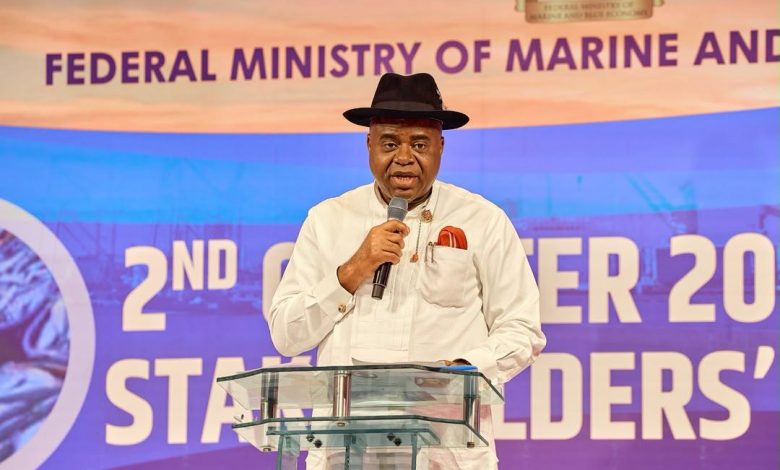
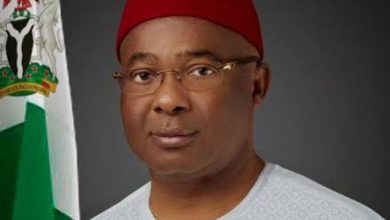
Governor of Bayelsa State, Senator Douye Diri, has advocated for Nigeria’s coastal states to maximize their aquatic potential to contribute to the growth of the country’s marine and blue economy.
Governor Diri also contended that the country’s maritime domain holds enormous potential to boost its economic growth.
The Bayelsa governor stated this on Thursday in a keynote address with the theme, “Sub-National Leadership in Advancing Nigeria’s Maritime and Blue Economy: The Bayelsa Experience and Pathways for Coastal State Development” during the 2nd Quarter 2026 Citizens/Stakeholders’ Engagement organized by the Federal Ministry of Marine and Blue Economy at the Eko Hotel and Suites, Victoria Island, Lagos.
Governor Diri asserted that of Nigeria’s more than 850km coastline, it is the states that have the waterways and that they must move from being spectators to stakeholders.
He proposed five pathways for coastal states to collaborate for not only their collective progress and that of their communities but also Nigeria’s.
He said there was need for these states to institutionalize and create focal ministries or agencies and give them political and financial authority.
He also urged them to enact blue economy laws that align with the national policy and which reflect their unique geography and people.
According to him, such sub-nationals should secure and map out their domain as well as invest in coastal security and credible ocean data.
Diri, who further stated that the sub-nationals should establish maritime skills hubs, modernize fish processing and build cold storage, proposed that coastal producers be connected to national and global value chains.
The Bayelsa helmsman, who became the first governor in Nigeria to create a full-fledged Ministry of Marine and Blue Economy in the country in 2024, explained that the move was inspired by the Federal Government’s creation of a similar ministry in 2023 by President Bola Tinubu.
He said: “To ignore the Blue Economy in Bayelsa would be to ignore Bayelsa itself.
That is why, following the initiative of the Federal Government, Bayelsa is not merely a state with a bespoke ministry, we are a national model for how to institutionalize and mainstream the Blue Economy at the sub-national level.”
On achievements in the sector, he said one of the state’s flagship priorities was the Agge Deep Seaport, which he noted was not merely a port but a gateway vision for regional trade, logistics, industrial development, fisheries exports, and wider integration within the Gulf of Guinea.
Consequently, he said his administration appointed a Transaction Adviser and that work had advanced to the inception report stage.
Diri expressed appreciation to the Federal Ministry of Marine and Blue Economy and other relevant federal institutions as it looked forward to a continued collaboration to move the Agge seaport from vision to bankable reality.
He also stated that Bayelsa had made modest progress in the sector following the creation of the ministry as “the state has moved from natural endowment to institutional recognition; from consultation to policy formulation; from validation to implementation.
“We are currently finalizing the Bayelsa State Blue Economy Law. This legislation will provide certainty for investment, protect our ecosystems, and enshrine the rights of coastal communities. Investors do not gamble where the law is silent.”
On opportunities and investments in the sector, Diri said his administration had begun to translate the vision into practical action.
In the area of fisheries and aquaculture, he noted that government had commenced the operationalisation of the Bayelsa Aquaculture Village at Yenegwe, which is a 127-hectare facility designed as a major production, training, and enterprise hub.
According to him, the village has a hatchery capable of producing over three million fingerlings per cycle; 500 grow-out ponds, each measuring 20 metres by 50 metres; and a feed mill with capacity to produce up to 20 tonnes of fish feed per day.
Declaring the event open, the Minister of Marine and Blue Economy, Adegboyega Oyetola, said the successful implementation of the blue economy policy last year marked an important milestone in the sector.
Oyetola noted that it provided Nigeria with a coherent, strategic framework for unlocking opportunities that abound within the country’s ocean space, inland waterways and coastal resources.
He stressed that effective implementation of the national policy in the sector cannot rest solely on the federal government, adding that the states, the private sector and development partners were critical in realizing President Tinubu’s Renewed Hope Agenda for the sector and the country.
Also, President of the Dangote Group, Alhaji Aliko Dangote, who was represented by Managing Director of Dangote Ports Operations, Mr. Simon Akin Omole, remarked that Nigeria’s blue economy was no longer defined by its potential but by the collective willingness to unlock it.
“The decisions we make today will determine whether future generations inherit a coastline untapped promise or a globally competitive economy that drives investments, industrialisation and shared prosperity,” he said.
Present at the well-attended event were all the institutional stakeholders in the sector as well as the governors of Akwa Ibom, Ondo and Borno, who were represented by the Deputy Governor, Senator Akon Eyakenyi, Mr. Olu Alade and Dr. Abdulkarim Babagana respectively, and chairman of the Senate Committee on Marine and Blue Economy, Senator Wasiu Sanni.
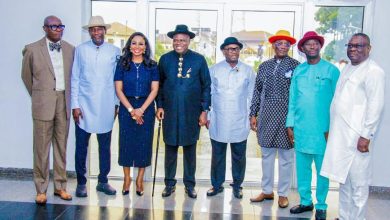
The governor was accompanied by the Commissioner for Marine and Blue Economy, Dr. Faith Izibenua-Godwin, her Information and Environment counterparts, Mrs. Ebiuwou Koku-Obiyai, and Hon. Ben Ololo as well as the General Manager, Bayelsa Housing and Property Development Authority, Hon. Tonye Isenah and the former Managing Director, Niger Delta Development Commission, Chief Ndutimi Alaibe.