
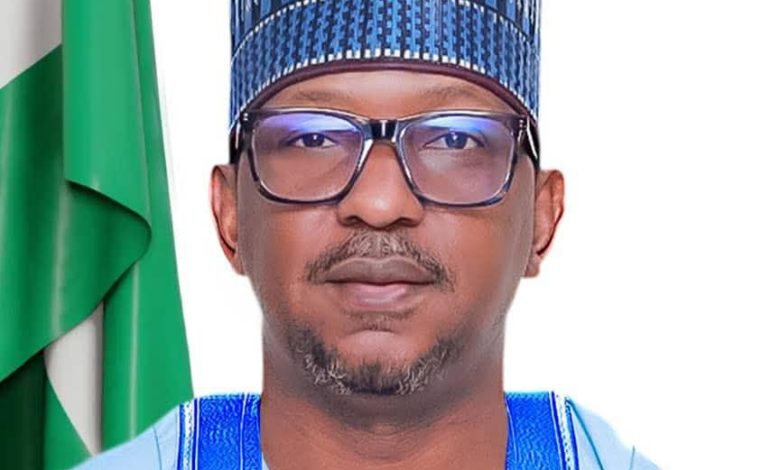
NFF PRESIDENCY: WHY STAKEHOLDERS MUST SUBJECT SHEHU DIKKO’S RECORDS TO STRICT SCRUTINY
..Football Governance, Accountability and institutional independence must come before personal ambition.
PART 2
By Sunday Agunbiade (Mr VAR)
Arising from part 1 of the above mentioned subject wherein Nigerian football searches for a new direction following resignation of Ibrahim Musa Gusau and members of his Nigeria Football Federation (NFF) executive committee on August 27, 2026, stakeholders must approach the question of future leadership with caution, objectivity and an unwavering commitment to accountability.
Another important issue is the relationship between the NSC and the NFF, particularly in the announcement and financing of football programmes.
The NSC has a legitimate role in national sports policy, public funding and the development of sports infrastructure.
The NFF, meanwhile, is the national football governing body responsible for administering football within its statutory and international governance framework.

These institutions must work together. However, collaboration should not blur their respective responsibilities or create uncertainty about who makes decisions, controls competition administration and accounts for football expenditure.
On June 24, 2026, reports by Premium Times and The Guardian stated that Dikko announced a proposed increase in NPFL champions’ prize money to at least ₦1 billion for the 2026/2027 season. The reported package also included proposed rewards of ₦500 million for the runners-up and ₦300 million for third place, subject to official confirmation by league authorities. A proposed minimum monthly wage of ₦2 million for NPFL players was also announced.
These announcements could represent important progress if the commitments are fully funded, formally approved and implemented transparently.
However, they also raise questions about the structure of decision-making and financial responsibility. Which institution formally approved each commitment? What is the source of the funds? Which body is responsible for disbursement? What are the conditions attached to the payments? What independent reporting arrangements will confirm that the money reaches its intended beneficiaries?
These are reasonable governance questions, not accusations of misconduct.
Stakeholders should also examine whether similar financial and administrative arrangements exist for national teams and other football competitions, including the Super Eagles, Super Falcons and youth national teams. Any assessment should identify the particular competition, the date of the announcement, the amount committed, the institution responsible and the evidence of actual payment.
Without such records, it would be premature to conclude that the NSC has improperly taken over the NFF’s responsibilities or that financial announcements have deliberately been diverted away from the federation.
Nevertheless, the public should not be left uncertain about which institution is responsible for decisions affecting Nigerian football.
Where the NSC provides funding, its contribution should be properly documented. Where the NFF administers a competition, its authority and obligations should be clearly defined. Where the NPFL is responsible for implementation, its accounts and performance should be independently verifiable.
This division of responsibilities would protect public confidence and prevent disagreements over institutional authority from undermining the game.
Nigeria’s football administrators must recognise that the country’s relationship with FIFA depends, among other things, on respect for the applicable statutes and governance rules.
The NFF’s autonomy is not a licence for financial mismanagement or poor performance. Equally, the government’s legitimate interest in national sports development should not be interpreted as an unrestricted mandate to determine the federation’s leadership.
The appropriate approach is to ensure that all leadership transitions, elections and major governance decisions comply with the NFF statutes, Nigerian law where applicable, and relevant FIFA requirements.
Stakeholders should therefore seek independent legal and administrative clarification of the processes surrounding the 2026 leadership transition. Any concerns should be presented with documentary evidence and submitted through the appropriate channels.
If credible evidence establishes that any individual or institution acted contrary to applicable rules, the relevant authorities should investigate and respond in accordance with due process.
Such an approach is more likely to protect Nigerian football than public accusations that have not been adequately substantiated.
The debate about the next NFF president should not be reduced to whether a candidate has held influential positions or enjoys access to government officials.
The presidency requires more than experience. It requires the capacity to build trust among clubs, state football associations, players, coaches, referees, sponsors, supporters and the international football community.
Candidates should present measurable plans for commercial development, transparent financial management, grassroots football, improved domestic competitions, player welfare, referee payments, youth development and the return of Nigerian national teams to major international tournaments.
They should also explain how they intend to protect the NFF’s institutional independence while maintaining a productive working relationship with the NSC.
Dikko should be judged by these standards if he seeks the position. So should every other aspirant.
The objective is not to prevent a particular individual from participating in a legitimate election through personal attacks. It is to ensure that stakeholders do not grant any candidate an automatic advantage without examining the evidence.
Shehu Dikko’s long involvement in football administration makes his record relevant to the debate about the NFF’s future. That same experience makes it reasonable for stakeholders to demand detailed explanations about the achievements and shortcomings of the institutions he has helped lead.
Before supporting him for the NFF presidency, stakeholders should seek answers about the effectiveness of previous league reforms, the settlement of financial obligations, the sustainability of sponsorship arrangements, the circumstances surrounding the 2026 leadership transition and the division of responsibilities between the NSC and the NFF.
These questions should be answered with documents, audited accounts, official correspondence and independently verifiable evidence and not political loyalty, personal hostility or speculation.
The ultimate choice belongs to the recognised football stakeholders acting under the applicable electoral framework. Their responsibility is to select a leader capable of earning confidence through competence and integrity.
The message is clear: Nigerian football stakeholders should not give Shehu Dikko an automatic path to the NFF presidency or his preferred candidate (if any). They should demand answers, examine his record and insist on transparent, credible and competitive leadership selection.
The future of Nigerian football is too important to be determined by influence alone. It must be determined by evidence, accountability, institutional independence and a clear plan for progress.
I so humbly submit