
Why Seyi Makinde’s Ibadan Identity Cannot Be Questioned
By Hon. Dare Adeleke (Omo Arogun Mosa)
The attempt by Diran Odeyemi to question Governor Seyi Makinde’s connection to Ibadan is not only misplaced but also overlooks the rich history, heritage and identity of the Makinde family.
A man’s roots cannot be erased by political rhetoric, nor can his ancestral heritage be diminished by partisan attacks.
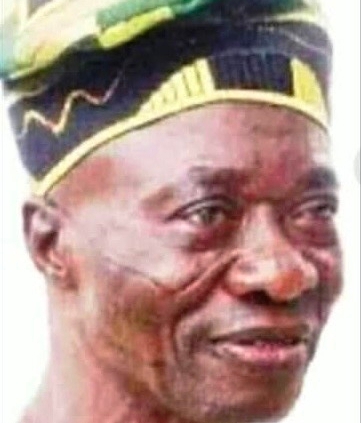
Let us begin with a face that tells a story.
This is the late Pa Olatubosun Makinde, father of Governor Seyi Makinde, of Ile Aigbofa, Oja-Oba, Ward 1, Ibadan South-East. I invite Diran Odeyemi and everyone questioning the governor’s Ibadan credentials to take a closer look at this distinguished patriarch.
The mark on his face is known as Gombo, a traditional facial mark associated with Ibadan heritage and its warrior history. It is a symbol of identity and ancestry, not a mark of servitude.
It speaks to a proud cultural tradition that connects generations of Ibadan families to the history of the city and its military institutions, including the traditions associated with the Balogun, Otun and Osi titles.
This was the father of Governor Seyi Makinde—a man whose life reflected education, professional achievement, religious commitment and a deep connection to his community.
Pa Olatubosun Makinde was a respected teacher trained at St. Luke’s Demonstration School, Molete. He was a brilliant scholar who pursued and passed examinations in the United Kingdom through correspondence.
He went on to build a career in banking, passed his AIB examinations and worked with Wema Bank. Beyond his professional accomplishments, he was a committed Christian who served as a church warden for seven years.
These are the credentials of a man whose life was rooted in discipline, service and a sense of belonging.
His story is also part of the story of Ibadan. His ancestral home at Oja-Oba, in the heart of the city, is a reminder that the Makinde family’s connection to Ibadan is neither recent nor manufactured for political convenience.
So, Diran Odeyemi, on what basis do you question Seyi Makinde’s identity as an Ibadan man?
Governor Seyi Makinde is deeply connected to the city through his family, ancestry and upbringing. His father’s heritage and the family’s roots at Ile Aigbofa are part of that enduring connection. No political argument can simply wish these historical ties away.
There is a Yoruba proverb that says, “Ilé la ti ń kẹ́sọ ròde”—charity begins at home. It is a sound principle, but it should not be twisted into an argument that a leader must confine his political engagement to his immediate hometown.
Governor Makinde’s political influence and responsibilities extend beyond Ibadan and Oyo State. As a prominent political figure in the South-West, he has every right to engage with stakeholders and citizens across the region.
A zonal town hall meeting held in Akure, Osun, Ekiti or Lagos does not diminish his Ibadan identity. Rather, it reflects the broader political constituency within which he operates.
If political engagement outside one’s home state is evidence of a lack of attachment to one’s roots, then that standard must apply consistently to every political leader.
President Bola Ahmed Tinubu’s political engagements beyond Lagos, including in other parts of Nigeria, have never meant that he ceased to be associated with Lagos. Why, then, should Governor Makinde be subjected to a different standard simply because he chooses to engage with people across the South-West?
Political consistency demands that we judge leaders by the same principles, regardless of party affiliation or personal preference.
I am concerned that the argument against Governor Makinde is increasingly framed around personal attacks rather than a substantive discussion of his record, political vision and leadership.
There are also questions about whether the criticism directed at the governor is influenced by the broader political rivalry involving Nyesom Wike. In my view, the political tensions surrounding Governor Makinde deserve scrutiny, particularly where disagreements appear to be driven by expectations of political loyalty rather than independent judgment.
Governor Makinde has demonstrated that he is prepared to make his own political decisions. He should not be expected to surrender his convictions or political independence to satisfy the interests of any individual or political camp.
His supporters believe that his political future could extend to the highest office in the country. Whether or not one shares that ambition, it is legitimate for him to participate in national political conversations and build alliances across Nigeria. Political aspirations should be debated on their merits, not dismissed through attempts to question a person’s ancestry or hometown.
Ibadan knows its own.
Ibadan is a city with a proud history, a formidable political tradition and a strong sense of identity. Its people understand the significance of family heritage, community roots and public service.
The late Pa Olatubosun Makinde’s story—his education, career, Christian service and family background—is an important part of the context in which Governor Seyi Makinde’s identity should be understood.
The governor does not need to prove his Ibadan roots by limiting his political activities to the city. Nor should his participation in regional politics be interpreted as evidence that he lacks confidence in his heritage.
A leader can be firmly rooted in his hometown while engaging with the wider world. Indeed, the ability to move beyond one’s immediate community without abandoning one’s identity is a strength, not a weakness.
Diran Odeyemi and others who disagree with Governor Makinde are entitled to their political opinions. However, such disagreements should be grounded in facts, consistency and substantive arguments—not attempts to deny a family its heritage.
My position is clear: Governor Seyi Makinde’s connection to Ibadan is rooted in his family history and ancestral ties, and it cannot be erased by political controversy.
Ibadan is central to the Makinde family story. Oyo State remains central to the governor’s public responsibilities. His political engagement across the South-West is entirely compatible with both.
The debate should therefore move beyond the question of whether Seyi Makinde belongs to Ibadan and focus instead on the issues that matter to the people: governance, development, accountability and the future of our region.
For my part, I will continue to defend Ibadan’s heritage and challenge arguments that, in my view, misrepresent the historical and cultural identity of its people.
Oyo State is proud of its heritage. Ibadan is proud of its sons and daughters. And no political disagreement should be allowed to erase the history of a family or diminish the identity of a people.